%20(1)%20(1).webp?width=352&height=100&name=Jess_Ekstrom_MicDrop_Reverse_horizontal_R%20(1)%20(1)%20(1).webp)



You’ve written your keynote speech, built your website, and changed your LinkedIn title to “public...
TL;DR
You can absolutely find paid speaking gigs without a huge email list or years of experience. The speakers who get paid consistently combine targeted outreach, strategic online presence, and smart networking. This guide walks you through the best places, platforms, and strategies to find paid speaking engagements — and how to actually get booked.
- You don’t wait for gigs to appear — you systematically go find them.
- Paid opportunities hide in spots most speakers overlook (directories, marketplaces, CFPs — call for speakers).
- A strong speaker profile + proactive pitching dramatically increases your chances of booking paid gigs.
This article is here to make the “where do I find paid speaking gigs?” question feel doable and actionable.
Why Paid Speaking Gigs Are Not Hidden — They’re Just Missed
In the speaking world, visibility equals opportunity. Most paid gigs come from organizing your visibility ecosystem — directories, platforms, networks, and strategic outreach — not from waiting. Once you start treating gig hunting like a system instead of a hope, your booking rate goes up.
In practice, speakers who treat gig hunting like a system (instead of a wish) book more consistently. They know where to look, who to contact, and how to position themselves clearly. Once you shift from passive to proactive, opportunities start to show up in places you didn’t even realize existed.
1. Use Speaker Marketplaces and Directories to Get Discovered
One of the most overlooked ways to get paid to speak is simply being searchable where event planners already look.
Best Websites That Connect Speakers With Paid Opportunities
- Mic Drop Workshop Directory - A curated directory of certified keynote speakers who are graduates of Mic Drop Academy, Mic Drop Workshop’s 12-week live coaching program. Event organizers use this directory to find trained, vetted speakers who are booking-ready and skilled at delivering high-impact talks. Applications open seasonally for speakers ready to get listed.
- SpeakerHub — You can create a speaker profile and browse posted opportunities. Organizers use this to find speakers by topic.
- ExpertFile / SpeakerMatch — These platforms are used by media outlets and event planners to source experts and speakers.
- LinkedIn & LinkedIn Speaker Bureau — This isn’t just social media. When your profile includes keywords like “conference speaker,” “keynote speaker,” or your niche topic, you become discoverable in organizer searches.
- Eventbrite & Meetup Event Listings — While not traditional speaker directories, many organizers list “call for speakers” or event details that lead you to planner contact info.
💡 Pro Tip: Use the same headshot, positioning statement, and bio across every directory. Consistency builds trust and makes you look more established than someone with five different versions of who they “kind of” help.
2. Set Up Automated Alerts (So Opportunities Come to You)
You don’t have to scroll event pages for hours every week. Let the internet do some of the work.
How to Use Google Alerts
Set up alerts for:
- “[Your niche] conference speaker”
- “Call for keynote speakers”
- “Paid speaking opportunity + [your topic]”
- “Submit a speaker proposal [industry]”
This delivers opportunities to your inbox as they’re published.
Why This Works
Many events — especially smaller conferences, industry summits, and association gatherings — post speaker calls on their own websites or niche boards. These don’t always rank high on Google. Alerts help you catch them early, when organizers are still building their speaker lineup and are more open to new voices.
3. Pitch Yourself to Event Organizers and Meeting Planners
This is where many speakers freeze. They think, “I’ll apply when I’m more experienced.” Meanwhile, experienced speakers are pitching every month.
How to Find the Right People
Use LinkedIn, Google, and event websites to search for:
- Conference/Meeting Planner
- Program Coordinator
- Education Director
- Event Organizer
- Community Manager (for membership organizations)
Once you find a name, don’t overthink the email. Your goal is clarity, not impressiveness.
Your pitch should include:
- Who your talk serves
- What outcome your audience gets
- A short testimonial or relevant gig video/links
Here’s a tiny pitch formula that actually works:
“Hi [Name], I help [target audience] solve [problem] with [talk title/outcome]. I noticed your upcoming event, and I’d love to explore if my talk would be a fit for your audience.”
In practice, this conversational, outcome-focused pitch gets replies far more often than generic self-intro emails.
4. Leverage Professional Associations & Local Events
Associations often need speakers for member events — and plenty of them pay.
Examples to consider:
- Women’s business associations
- Industry trade groups
- Professional development councils
- Chamber of Commerce leadership events
- Local business networks and community organizations
When you join these groups, you get access to event calendars before the public does. You also start building relationships with organizers who often book speakers year after year. One talk can turn into annual invitations or referrals to other chapters.
Even if the first opportunity is modestly paid, the credibility and testimonials you gain often lead to higher-paying bookings later.
5. Create Your Own Opportunity (Because Sometimes You Make the Stage)
If the “perfect” gigs aren’t appearing yet, create visibility on your own terms.
Ideas you can implement:
- Host a virtual summit with 3–5 speakers
- Create a workshop series and invite registrations
- Partner with local businesses to co-host events
This positions you as a leader and convener, not just a hopeful speaker. Event planners notice people who can gather audiences. It signals authority, organization, and demand — all things that make you more attractive as a paid speaker.
6. Build Your Speaker Profile First (So You Get Paid)
Finding gigs is only half the equation. Converting them into paid bookings requires a strong speaker presence.
Your speaker profile should include:
- A clear positioning statement (“I help [audience] achieve [result]”)
- 2–3 talk titles with short outcome-driven descriptions
- A short demo video or clips of you teaching or presenting
- Testimonials or endorsements
- A downloadable speaker one-sheet (PDF) with bio, topics, and contact info
Event organizers are busy. The easier you make it for them to understand your value, the more likely you are to get the “yes.”
BONUS: The Speaker Sister Facebook Group
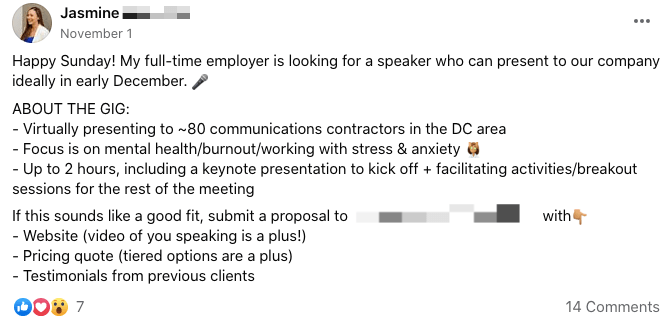
Don’t underestimate the power of networking. When you enroll in Mic Drop Workshop, you get immediate access to our private #SpeakerSister Facebook community of 1,200+ women sharing speaking opportunities and tips on a daily basis. When one #SpeakerSister wins, we all win. Imagine checking your Facebook notifications and seeing opportunities like this:
Summary of Common Questions
How do I join a marketplace for professional paid speakers?
Create a detailed speaker profile on sites like SpeakerHub, ExpertFile, and associated directories where event planners browse speaker talent.
What are the best online tools to find paid keynote speaking gigs?
LinkedIn (search and connect with planners), Google Alerts, Eventbrite/Meetup listings, and speaker directories help you find gigs and get listed.
How to use professional networks to land paid speaking gigs?
Join associations, attend conferences, and build relationships with planners and organizers who book speakers year after year.
Finding paid speaking gigs isn’t luck — it’s a system. If you treat it like one, you’ll start seeing opportunities move from “hope” into “yes.”
There’s no better time than now to kickstart your speaking career. For more tips and guidance on monetizing your story and building a profitable & impactful speaking business, enroll in our public speaking course for women - Mic Drop Workshop.